Showing posts with label Business models for Dummies. Show all posts

Sunday, April 6, 2008

Ansoff's Matrix, Hmmm...Sound's Complicated


Mr. Ansoff is one of the many creators of these flippin models that make our lives hard during school. I mean, really, where do they get the time to come up with these! Anyways, for those of you who need further clarification on what Mr. Ansoff is talking about...this one's for you.


First of all................what is Ansoff's Matrix used for?
This matrix is another nice pretty little packaging of information. This matrix is used to decide which direction to take in regards to product and market growth.
As you can see in top right model, there are four different options.
1. Entering an existing product into an existing market.
This is called Market Penetration Strategy.
Why?.......................because Mr. Ansoff says so!

It's pretty much the same product for the same customers with some extras or some sort of change.

What does this mean?
Well, when you have an existing product in an existing market, what do you do to increase market share?
It's not going to increase by itself!
The options for increasing market share are pretty much two.You can find ways for the product to be used more per occasion, or find new uses for it.
Ex. Ever see when shampoo and conditioner bottles say in the directions rinse and REPEAT! Ha! Nobody washes their hair and then rewashes it! This is asked so that you use more of the product and in turn, buy more of the product. Sneaky! Sneaky! Or, have you ever seen on the back of baking soda boxes, where they show you all sorts of different ways to use the baking soda? Do you think they like you and want to be helpful? No! That my friends, is a way to make you think that they are really nice and in return you use more of their product which eventually makes them more money!

Or......You can turn non users into users.This is pretty much promotion. You got to convince the other people in that particular market that they should be using the product that the other people in their market segment are using.
2. Existing products into New markets
This is called Market Development Strategy.
Why?..................Because by entering a new market you are developing markets, or at least Mr. Ansoff felt that to be so.
Anyways..............what does this mean?
There are a few different options for existing products to be introduces into new markets. Remember, using the Market Development Strategy you have to clearly define your market. Defining the criteria for the market includes geographic, demographic, psychographic, user status, and so on criteria. After you define your existing market then you decide how you will enter the new market. You can go into another country or geographical location.You can alter aspects such as the packaging in order to attract different market segments.You can enter new distribution channels.You may even change the price to attract new markets. Pretty much what it gets down to is, any change that will attract new markets is New Market Development Stategy.
3. New Products into Existing Markets
This is called Product Devopement Strategy.
Why?.................because here we are developing the existing products or making new ones!
This isn't so hard to understand. Your basically making a new product that you will introduce into the market that you already have. Ex. You make shampoo, now you make hair gel. The product is aimed at the same group of people, its just something new. Even adding something to a product technically makes it new. Like adding strawberries to cereal. Its still cereal, but now it has strawberries!
4. New Products into New Markets
This is called Diversification Strategy!
Why?................Why not?
This is where you get risky. You are taking a new product and you are taking it into a new market.
Ex. You make cars and now you decide to open a chain of fast food places. Two completely different products in two completely different markets.
Now you should be able to answer that multiple choice question on your mid-term regarding Ansoff's Matrix!
Good Job!
By Maria

Wednesday, April 2, 2008

S.W.O.T. isn't only for flies....


One of the first business models a student is taught is the S.W.O.T. analysis. For anyone who was absent the day the concept was introduced here's a recap...

S stands for Strengths!

W stands for Weaknesses!

O stands for Opportunities!

T stands for Threats!

Isn't that nice and easy!

Obviously, there is more work to be done in this model than meets the eye.
First of all, we need to understand what a S.W.O.T. is used for. It is used to evaluate the current situation within an organization and its environment in order to make decisions for the future. The problem is, the information used in the S.W.O.T. is gathered by using other business models. Technically, you are supposed to do a P.E.S.T.E.L., Porter's 5 Forces, and so on and from the information found there, then you come up with a S.W.O.T. analysis.

To be specific, the Strengths and Weaknesses are determined by models that describe our internal environment. Why not add an example? They always help.

When you think of strengths and weaknesses think about what your organization does better than its competitors. So being really, really nice is not a strength of a company, unless all of their competitors are jerks! Or... good technology, is that a strength? Not if you don't use it! It's like a man being well endowed, if he doesn't know how to use it, it isn't one of his strengths! Am I right or am I right!!! If you are still wondering where to find strengths and weaknesses you can also look at your 7 S's model. If you don't know this model, please look for it in the Business Models for Dummies section of this blog.

Now for the Opportunities and Threats. Now these are taken straight out of the P.E.S.T.E.L. and Porter's 5 Forces models. The P.E.S.T.E.L. is the external macro environment and Porter's is for the internal Micro environment. An opportunity is whatever benefits you can find in the P.E.S.T.E.L. If laws made benefit you, if they are going to build a new highway that passes by your organization, and so on may be opportunities. Remember, an opportunity for one organization is a threat to another. Using the highway example, if you are opening a fast food place, a highway being built next to it is a godsend. But if you have a retreat spa, then a highway with cars making noise and so on will pretty much ruin your quiet sanctuary. Stick to the P.E.S.T.E.L. and you will find your opportunities and Threat

So, I guess, a S.W.O.T. is a nice little wrap up of all the hours of hell looking for information for a P.E.S.T.E.L, and Porter's, and so on. Don't make the mistake of making a second rate, incorrect model because it seems easier to fill in the sections with generic answers that were stated before.
Oh yeah, I hope I don't have to explain what a strength, weakness, opportunity, or threat are for a company! The main thing is understand that a S.W.O.T. is a gathering of information already gathered in a nice, neat format. Good Luck!

By Maria

Thursday, March 27, 2008

Four P's..You wish! Try Eleven!


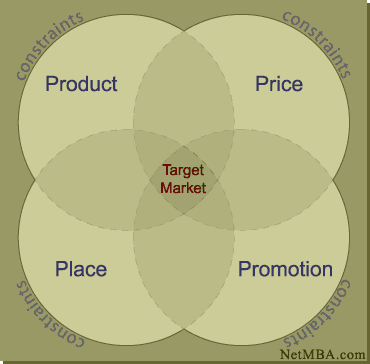
When I took my first Marketing course three years ago, I learned that the marketing mix consisted of the 4 p's, which were product, pricing, promotion and place. I think that at this point, every person who is studying marketing is soooo sick of hearing about them. As if 4 p's weren't enough, they went and added more. Was there a competition to come up with words starting with P in marketing that I wasn't aware of?? And who decided that they all had to start with P. Anyways, the P words that made the list are as follows:

People, Process, Physical evidence (Hey, does this one count, it sounds like an F), Personalization, Participation, Peer-to-peer, Predictive Modeling.
In order to help any student or any person interested, these are the definitions of the extended marketing mix:

People: Any person coming into contact with customers can have an impact on overall satisfaction. Whether as part of a supporting service to a product or involved in a total service, people are particularly important because, in the customer's eyes, they are generally inseparable from the total service.
It's like if you went into a food place, and everything was great! The food delicious, the service outstanding, everything perfect. Then you see the waiter pick their nose. I mean, that's gross to see when eating. That could make a person not want to come back. Because of incidents like this, people must be appropriately trained, well motivated and the right type of person for the job. Fellow customers are also sometimes referred to under 'people', as they too can affect the customer's service experience, (e.g., at a sporting event).
Process: This is the process (es) involved in providing a service and the behavior of people, which can be crucial to customer satisfaction.
Most things in life require you to follow a process. This was an easy add on to the p's because it can be applied in almost any situation.

Physical Evidence: Unlike a product, a service cannot be experienced before it is delivered, which makes it intangible. This, therefore, means that potential customers could perceive greater risk when deciding whether to use a service. To reduce the feeling of risk, thus improving the chance for success, it is often vital to offer potential customers the chance to see what a service would be like. This is done by providing physical evidence, such as case studies, testimonials or demonstrations.
It is hard to make something that is invisible, visible to people. This is the challenge when dealing with services marketing.

Personalization:This sounds like it has to do with people in general. It doesn't. It has to do with personalizing for people. It is customization of products and services through the use of the Internet. Early examples include Dell on-line and Amazon.com. Now, companies like Nike allow you to go online and design your own shoe. Emerging technologies will continue to push this idea forward.

Participation: This is to allow customers to participate in what the brand should stand for; what should be the product directions and even which ads to run. Some go so far as to put contests on YouTube for people to make advertisements for companies and brands. We'll keep our eye on this one and see how far it goes.

Peer to Peer: This refers to customer networks and communities. The problem with marketing is that it is “interruptive” in nature, trying to impose a brand on the customer. Marketing is your grandmother trying to force you to eat something when you aren't hungry. This is most apparent in TV advertising. These “passive customer bases”, like the television and radio, will ultimately be replaced by the “active customer communities”, which are more personal. P2P is now being referred as Social Computing and will likely to be the most effective in the future of marketing.

Predictive Modeling: This is what it sounds like. It is models that help predict the way marketing efforts will go. You know the models! If you don't, check out the Business Models for Dummies section of this blog.
And there you have it. I'm sure before you finish reading this, they have already come up for more P's for us to memorize.

By Anastasia

Sunday, March 23, 2008

Mr. Michael Porter and his Five Forces for Competition


Our friend, Mr. Michael Porter has given us a diagram to explain what forces affect you or your business in regards to competition. What a nice guy!

But what exactly is he talking about?

First of all, the five forces are........drum roll.......

1.) Bargaining power of the buyer
2.) Bargaining power of the supplier
3.) Current competition
4.) Threat of new entrants
5.) Threat of new products

Does this mean anything to you? If not, lets try to make all of these make sense. Here we go, one by one.


[[ 1.) Bargaining power of the buyer

What does this mean?

Who has the upper hand? Is it you or is it your customer? In most cases, you better hope it is you! Consider the following situation.....

You own a small hotel. It's off season. Your rooms are gathering dust and the cleaning crew is bored. You get a call from a school about six hours away from your hotel saying they are going to need to book every room in the hotel the following week.

Before you get too excited.....

She is offering you less than half the amount of money from the price during the regular season. Don't forget that the little runts will drive your employees crazy, make a mess,and drive any other potential customer who would pay regular price,away.

Sorry to tell you, but the buyer in this situation has the power. She's offering you less money and a lot of hassle but it is better than nothing. You will probably accept her offer. It's not so fun for the owner when the buyer has the power.

Let's switch things up....

You still own the hotel. It is now regular season. The same teacher calls, asks for the same deal. You tell her even more money than regular and state that you are offended that she would even make that embarassing offer.

Why can you do this?

Well, you see this time your hotels busy with regular paying customers and your staff is busy as well. You would lose lots and lots of money from regular customers as well as have them complain about the amount of noise that the kids are making. The teacher, in general would have a very hard time finding a hotel that is willing to put up with the kids, let alone accept less money for doing so.
In this situation, you, the owner have all the power.

Seems simple enough, right?

2.) Bargaining power of the supplier

This one has a very simple example that should be easy to understand.

You own a business that sells coke. You and many other businesses sell coke. Many, many other businesses! The supplier has many many customers to choose from so losing you isn't really that important to him or her.
In this case....the supplier has all the power.

Flip it around now.
You order soda from a supplier that has only you and one other business as customers. If you leave him or her, they are pretty much screwed because then they will lose half of their business.

In this case, you have the power, not the supplier.

You see, if you are one of many customers for a supplier, the suplier has the power, if you are one of a few customers for the supplier, you, the business, have the power.

3.) Current competition.

What's this?

Really, C'Mon!!!! Current competition! What does current mean? What does competition mean? Ok now, put them together. If you still need help...
Current competition is the people or businesses that you are in competition with, right now.

4.)Threat of new entrants

What does Mikey mean?

Well, you have current competition, those are who you are competing with right now. We covered that just a second ago. New entrants, however, is who else is going to come on by and also be your competition. Is there a threat for new entrants constantly, or are there barriers set up either by you or naturally? Are you easy to copy? These are only a few of the consideration when determining your level of threat for new people coming in trying to steal your market share.
Last but not least......

5.) Threat of new products

What does this mean?

This is beyond people copying you or becoming just regular competition, this is replacing you with something else.

A good example, where did beepers go???

If you remember beepers, they were used for paging people so that they knew that they needed to call you back.
Cellular phones came out and kinda made beepers useless. This is a perfect example for understanding how bad of a threat a new product may be. It may mean, extinction of your product!

These, my friends, are the wonderful additions to our knowledge of business competition Michael Porter bestowed apon us. Hopefully, we are all grateful that he figured out these forces to competition and shared it with us so that we are more capable of understanding what we will face in the business world. Thank you Mr. Porter!!


[+/-] More.../less

By Maria

Friday, March 21, 2008

P.E.S.T., P.E.S.T.E.L., P.E.S.T.E.L.I., In the end it's all the same!


At some point in either your student or professional career you may and probably will have to make a P.E.S.T.E.L. (or any variation of the acronym) analysis in order to understand very important information pertaining to your business, either in a realistic situation or in an educational scenario.

First of all, what does P.E.S.T.E.L.I. stand for?

P, stands for political.

Why do we care?


[[ Whether you are deciding on opening a business at home or abroad, you must be aware of the political situation. For example, you may have a paper to write for one of your classes. The topic is to decide which country you would like to expand your business to. You don't do a P.E.S.T.E.L. You choose Cuba as your country. You then look like an ass. Why? Because if you had done your P.E.S.T.E.L., you would see that Cuba is a communist state. It may be hard to enter into a market that has a communist regime, don't you think?


This is a very basic example for a very important aspect of the P.E.S.T.E.L. Remember that when you are focusing on the P., of the P.E.S.T.E.L., you focus on the political regime and its regulators in relation to your particular business. You see how stable the situation is in the particular country as well as whether or not the information in the political aspects has relevance to your business. Don't focus on information that is useless! Not so hard so far, right?

E, stands for Economic.

Why do we care?

We study business right? Well, people having money to spend may, just may, be important to us. If we are going to open a business, realistically or hypothetically, we need to see whether the area, city, state, or country has the ability to give you money. Here we focus on G.D,P's, average household incomes, value of currency, industry trends, anything that has to do with $$$.


Example, (because we all love examples) if I want to open a branch in the real estate market in the United States today, it may be a bad idea. I might have to do a P.E.S.T.E.L. to realize that interest rates are terribly high, people are losing their homes, and the country is about to go into a recession. This information, once again, may be important to us. So far, so good!


S, stands for social.

Isn't this a fluffy aspect to look at. Social sounds cute doesn't it. Cute, it may be, but also very important when deciding to open a business. When we look at the social situation in a country we see whether or not our product or service would be accepted and successful in a particular area.


Example, If I decide to sell guns in Massachusetts, I may not be very successful. The second ammendment isn't really focused upon there. If I decide to sell guns in Texas though, I probably will have a much more successful outcome. This is one small aspect of the Social section of a P.E.S.T.E.L. Here we focus on culture, demographics, change, etc. It is very important to relate this area to your specific product or service. If you want to introduce a new car in a particular area, it is irrelevant whether the national passtime is playing football. Stick to the relevant ideas and you'll be fine.

T, means Technology

Why do we care?

Maybe it's just me, but this day and age technology seems to play an important role in every day life. The level of technology that is available to an area of your choice should be taken into consideration. You should already know I'm going to give you an example.

If you want to sell cell phones in China with the technology that is available in Europe, you may run into some problems. You see, Chinas technology, in reguards to cell phones, is far beyond the technology that has been developed in Europe. In the technology aspect of a P.E.S.T.E.L., you focus on the level of technology that is present in your area, meaning, how advanced is the area you are choosing? Do they send letters through the mail or do they email? Do they hand write or do they type? These are are few suggestions in determining what to focus on in this section. As always, you add information relevent to your product or service!

E, means Environment

Why do we care?

Are we talking about bunnies and bears? No! We are talking about things like clean water and air. Can I build a factory there without having Greenpeace up my butt? You understand where I'm going with this, right?

In the Environment section of the P.E.S.T.E.L. you focus on environmental issues relevant to your business. As stated before, having clean air and water might help my employees while they are working. Once again, if the manatee is endangered there, it probably isn't important, unless I decide to open a factory that dispenses toxins into the water where manatees live. This isn't that hard, I'm sure you'll do fine understanding what to put in this section.

L, stands for legal or legistative.

Why do we care?

This is the section that keeps the police out of our backyard and ourselves out of court proceedings. Depending on what business you are in and where, you must be fully aware of the legal situation there. You must know all the legislation in order to keep yourself from breaking the law.

Example, If you are doing business in a muslim nation, and you are not aware of the laws pertaining to Sharia, you just might run into problems. As in every other section of the P.E.S.T.E.L. you focus on legislation that pertains to you or your business.

Under normal circumstances you would be done with this analysis, but I have had the joy of an instructor who added another letter. Just in case you also run into an instructor who also feels this letter to be important, or if you would like to be more in depth for your business this letter is for you!

I, stands for Infrastructure.

What is Infrustructure? Picture a city. The roads, the water and sewer pipes, the telephone, cable, and electric wires, on and on and on, is the infrustructure.

Why do we care?

Here is a beloved example. If I want to introduce cable television and internet to Greece, I will, not may be, run into a problem. You see, Greece's infrustructure does not contain cable lines suitable to withstand full cable television and internet.

This is a small example of many that could be given that makes the infrustructure section of the P.E.S.T.E.L. very important. If your business requires trucks to deliver you supplies, make sure the area has roads! If you want a call center, make sure there are telephone lines!

This my friends, is a full P.E.S.T.E.L.I. analyis and how it is applied. I pray, nobody still has questions and hopefully this helped some of you. ]]


[+/-] show/hide this post

By Maria